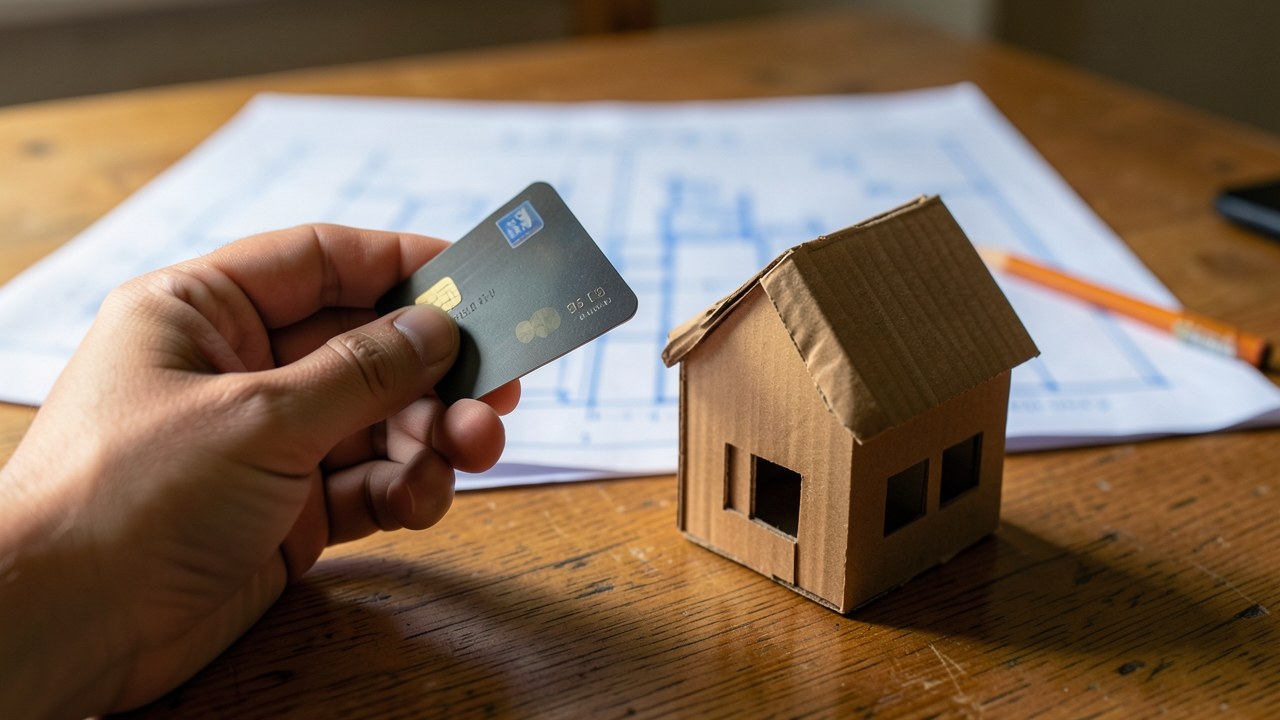
Overview of Home Depot Financing Options
When you're planning a home improvement project, Home Depot offers two primary financing products: the Home Depot Consumer Credit Card and the Home Depot Project Loan. Both are restricted to purchases at Home Depot stores, online, and for Home Depot Home Services, but they work very differently.
The Consumer Credit Card is a revolving credit line, similar to a store card, that you can use repeatedly for purchases of any size. In contrast, the Project Loan is a closed-end installment loan designed for a single, defined project, and it involves a one-time borrowing process with a fixed repayment schedule.
This guide compares the two across key factors—APRs, fees, rewards, special financing offers, and eligibility—to help you decide which aligns with your project size and financial preferences.
- Home Depot Consumer Credit Card: Revolving credit for ongoing, smaller purchases.
- Home Depot Project Loan: Fixed installment loan for larger, one-time projects.
- Both are limited to purchases at Home Depot and its services.
Sources: UP Keep Finance, Host Merchant Services, Credit Karma
Revolving Credit vs. Fixed Installment Loan
The core difference lies in how you borrow and repay. The Consumer Credit Card gives you a revolving credit line, so you can make purchases up to your credit limit and carry a balance from month to month, making minimum payments. Your available credit replenishes as you pay down the balance, and you can use it again for future purchases.
The Project Loan, in contrast, is a closed-end installment loan. You get approved for a specific amount (up to $55,000) and then have a six-month shopping period to make purchases. After that, any outstanding balance converts to a fixed-rate term loan, which you repay in equal monthly installments over a set period—typically 66, 78, 90, or 114 months (5.5 to 9.5 years).
This distinction matters for your repayment strategy. With the credit card, you have the flexibility to pay off the balance quickly or over time, but the variable APR can change. With the Project Loan, your interest rate and monthly payment are fixed, which can make budgeting easier, but you commit to a longer repayment term.
- Credit card: Revolving, flexible, minimum payments, variable APR.
- Project Loan: Fixed term, fixed APR, predictable monthly payments.
- Project Loan offers a six-month shopping window before conversion to term loan.
Sources: Finder, UP Keep Finance, Credit Karma
Rewards and Benefits Comparison
Neither financing option offers ongoing rewards such as cash back, points, or store credit. The Consumer Credit Card does not earn rewards on purchases, and the Project Loan is not a rewards product either. So, if you're hoping to earn benefits on your spending, you'll need to look elsewhere.
However, the Consumer Credit Card does offer a valuable non-rewards benefit: an extended return period of up to one year, compared to the standard 90-day return policy at Home Depot. This can be a significant perk if you're buying appliances or materials that you might need to return later.
The Project Loan's benefits are centered on the financing itself: a fixed rate, predictable payments, and the ability to carry larger balances at potentially lower APRs than the credit card.
- No ongoing rewards on either product.
- Credit card: Extended return window (up to 1 year) vs. standard 90-day policy.
- Project Loan: Fixed-rate financing may be better for long-term budgeting.
Sources: UP Keep Finance, Host Merchant Services, Upgraded Points
APRs and Fees Comparison
The interest rates on these two products are structured very differently. The Consumer Credit Card has a variable APR that depends on your creditworthiness—reported ranges include 17.99% to 26.99%, though some sources note a higher APR of 29.99%. This means your rate can change over time, and if you carry a balance, you'll pay interest at that rate.
The Project Loan offers fixed APRs ranging from 7.42% to 19.96%, depending on the repayment term you choose. Because the rate is fixed, your monthly payment stays the same for the life of the loan, which can be a distinct advantage if you want certainty.
On fees, the Consumer Credit Card has no annual fee. The Project Loan, according to LendEDU, has no origination fee, application fee, or prepayment penalty, although this information may not be fully verified by all sources.
- Credit card APR: 17.99% – 26.99% (or up to 29.99%) variable.
- Project Loan APR: 7.42% – 19.96% fixed, depending on term.
- No annual fee on the card; Project Loan may have no origination or prepayment fees.
| Feature | Home Depot Consumer Credit Card | Home Depot Project Loan |
|---|---|---|
| Type | Revolving credit card | Closed-end installment loan |
| APR range | 17.99% – 26.99% (variable) | 7.42% – 19.96% (fixed) |
| Repayment terms | Revolving; minimum payments | 66, 78, 90, or 114 months |
| Annual fee | None | Not applicable (installment loan) |
| Rewards | None | None |
Sources: Finder, Upgraded Points, WalletHub, LendEDU
Special Financing Offers and Promotions
Special financing is where these two products diverge most. The Consumer Credit Card frequently offers deferred interest promotions—commonly six months on purchases of $299 or more. With deferred interest, you pay no interest if you pay off the full balance within the promotional period. However, if you don't pay in full, interest is applied retroactively from the original purchase date, which can result in a large interest charge.
The Project Loan offers a different kind of deal: a 0% APR during the six-month shopping period after approval. During this time, you can make purchases without interest, but at the end of six months, any remaining balance converts to a fixed-rate installment loan, and you begin repaying according to the term you selected.
The key risk with any deferred interest promotion is falling short of full repayment, as the Consumer Financial Protection Bureau highlights in its analysis of credit card deferred interest offers. With the Project Loan, the interest rate is already built into the loan terms, so there's no retroactive interest risk—but you'll be locked into a longer repayment schedule.
- Credit card: Deferred interest (often 6 months on $299+), retroactive interest if not paid off.
- Project Loan: 0% APR for the first 6 months, then fixed-rate loan.
- CFPB warns of deferred interest risks on credit cards.
Sources: Host Merchant Services, Credit Karma, Consumer Financial Protection Bureau
Eligibility and Application Process
Eligibility for both products is based on your creditworthiness, but details of the application process and credit requirements are not fully documented in available sources. It's safe to say that your credit score and history will affect the APR you're offered.
Also, there's an important caveat regarding the Project Loan's availability: LendEDU reported in 2025 that the Home Depot Project Loan is no longer accepting new applications as of June 2025. However, other sources still describe it as an active product, so you should verify with Home Depot directly before assuming it's available.
- Creditworthiness affects APR for both.
- Project Loan allows co-applicants.
- Project Loan availability may have changed—verify with Home Depot.
Sources: Finder, Credit Karma, LendEDU
Which Option Fits Which Project?
The choice between the two depends primarily on the size and nature of your project. For smaller, frequent purchases—like buying tools, paint, or materials for ongoing DIY tasks—the Consumer Credit Card is more practical. You can use it repeatedly, take advantage of deferred interest on individual purchases, and enjoy the extended return period.
For a large, defined project—such as a kitchen remodel, new roofing, or installing HVAC—the Project Loan is designed to be a better fit. With a higher credit limit (up to $55,000) and fixed rates that are often lower than the card's APR, it can be more cost-effective if you need to spread payments over several years. The six-month shopping window lets you accumulate purchases for your project before converting to a fixed loan.
If you plan to pay off the balance quickly, either option might work, but the credit card's deferred interest offers can be very attractive if you're confident you can pay within the promo period. If you need a longer repayment timeline with predictable monthly payments, the Project Loan likely wins.
- Credit card: Good for small to medium purchases, frequent shoppers, and those who can pay off balances quickly.
- Project Loan: Best for large projects with long repayment needs and desire for fixed payments.
- Consider your repayment style: flexible vs. fixed.
Sources: UP Keep Finance, Credit Karma
Decision Checklist
Before you choose, ask yourself the following questions to narrow down the best option for your situation. Reflect on your project size, your ability to repay, and your preference for fixed vs. variable rates.
- What is the total cost of your project?
- Do you plan to pay off the balance within six months? If yes, a deferred interest offer on the credit card can effectively be interest-free.
- Do you prefer predictable monthly payments? The Project Loan's fixed APR and term offer certainty.
- Will you be making multiple purchases over time? The credit card's revolving nature suits ongoing spending.
- Are you comfortable with the risk of retroactive interest if you fail to pay off a deferred interest balance? If not, a fixed-rate loan might be safer.
- Can you leverage a co-applicant? If so, the Project Loan may offer better terms.
Sources: UP Keep Finance, Credit Karma, Consumer Financial Protection Bureau
Side-by-side category
To make an apples-to-apples comparison, we've organized the key attributes into a table. This isn't a ranking—it's a tool to help you match the financing to your needs.
| Category | Home Depot Consumer Credit Card | Home Depot Project Loan |
|---|---|---|
| Type | Revolving credit card | Closed-end installment loan |
| Maximum amount | Up to $55,000 (varies by credit) | $55,000 |
| APR range | 17.99% – 26.99% variable | 7.42% – 19.96% fixed |
| Repayment terms | Revolving; minimum payments | 66, 78, 90, or 114 months |
| Fees | No annual fee | No origination, application, or prepayment fees (per LendEDU) |
| Rewards | None | None |
| Special financing | Deferred interest, often 6 months on $299+ | 0% APR for 6 months, then fixed-rate loan |
| Use restriction | Home Depot only | Home Depot only |
| Appropriate for | Small to medium purchases, frequent shoppers | Large, defined projects |
Sources: Finder, UP Keep Finance, Host Merchant Services, Upgraded Points, Credit Karma, LendEDU
Frequently asked questions
Can I use the Project Loan for any Home Depot purchase?
The Project Loan can be used only for purchases at Home Depot stores, online, and for Home Depot Home Services. You cannot use it for purchases outside of Home Depot. Additionally, the loan is designed for a single project, so you must make your purchases within the six-month shopping period after approval.
Sources: UP Keep Finance, Credit KarmaWhich financing option has lower interest rates?
The Project Loan generally offers lower interest rates than the Consumer Credit Card. The Project Loan's fixed APRs range from 7.42% to 19.96%, depending on the repayment term, while the credit card's variable APR is higher, commonly reported between 17.99% and 29.99%. However, the actual rate you receive for either product depends on your creditworthiness. For smaller balances that you can pay off quickly, the credit card's deferred interest promotions can effectively be interest-free, which may be a better deal than the Project Loan's long-term rate.
Sources: Finder, Upgraded Points, WalletHubCan I get rewards with the Project Loan?
No, the Project Loan does not offer rewards such as cash back, points, or store credit. The same is true for the Consumer Credit Card—neither product earns ongoing rewards. You should not choose either based on rewards potential.
Sources: UP Keep Finance, Host Merchant ServicesIs the Project Loan better for large projects?
Yes, the Project Loan is designed for larger, defined projects. It offers a credit limit up to $55,000, fixed APRs, and repayment terms of up to 9.5 years, which can be more manageable for big-ticket renovations. Additionally, the six-month shopping period allows you to accumulate purchases for your project before repayment begins. However, be aware that as of June 2025, the Project Loan may no longer be accepting new applications (per LendEDU), so you should verify availability with Home Depot before relying on this option. For smaller or frequent purchases, the credit card may be more practical.
Sources: Finder, UP Keep Finance, LendEDUSources
- Home Depot Project Loan review — Finder
- Home Depot Project Loan: What It Actually Is (And When It's Worth Using) — UP Keep Finance
- Home Depot Credit Card Guide: Key Benefits, Offers & Insights — Host Merchant Services
- The Home Depot Credit Cards Reviewed - Worth It? [2026] — Upgraded Points
- Home Depot Credit Card Reviews: 900+ User Ratings — WalletHub
- Home Depot Project Loan Review: A Fixed Rate For Home Improvement Projects — Credit Karma
- Home Depot Project Loan No Longer Available — LendEDU
- The Consumer Credit Card Market — Consumer Financial Protection Bureau